

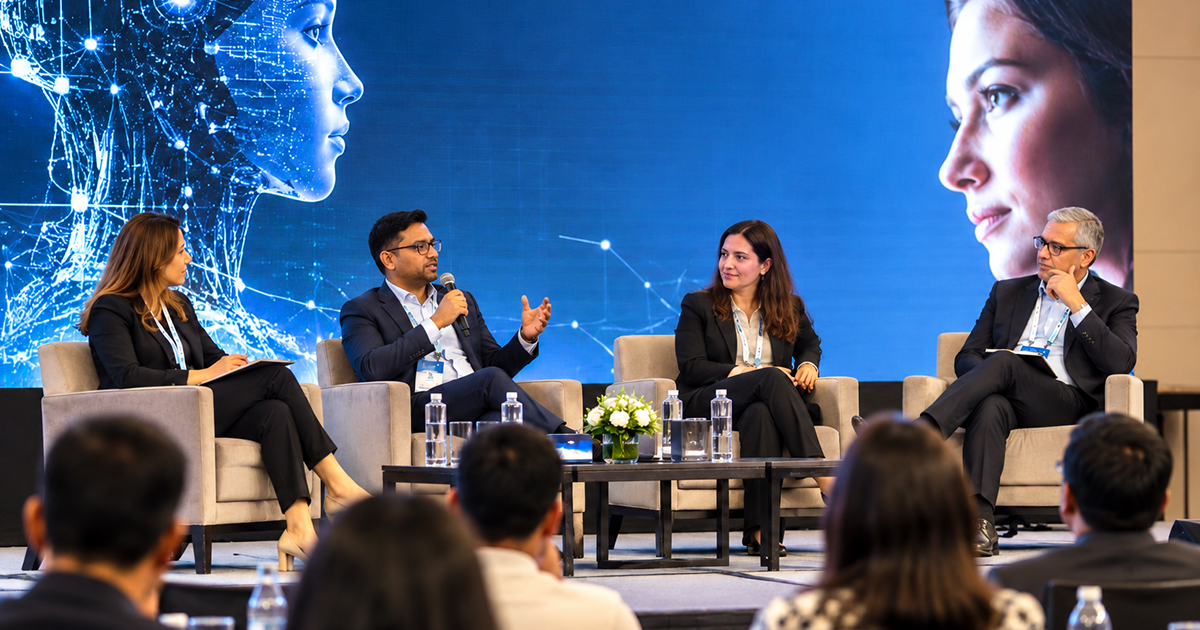
AI and human expertise work together to shape modern leadership through innovation, critical thinking, continuous learning, and responsible decision-making across industries.
Artificial intelligence is changing how organisations approach information, innovation, communication, and decision-making. Yet technology alone cannot define effective leadership. Human experience, professional judgment, creativity, and the ability to understand context remain equally important. At LoopLynks Events, we recognise this connection across industries through our focus on leadership, technology, innovation, education, healthcare, business, and professional recognition. Our work across areas such as education leadership awards reflects the importance of recognising expertise while understanding how professional roles continue to evolve.
The question for modern leaders is therefore not whether AI or human expertise matters more. It is how both can work together to create meaningful progress.
AI Is Changing the Leadership Conversation
Artificial intelligence has become part of the wider conversation around how organisations work and how professionals approach their responsibilities.
AI can support activities involving information, analysis, automation, communication, and other areas of organisational work. These capabilities are creating new questions for leaders about how technology should be introduced and where it can contribute most effectively.
Leadership in this environment requires more than adopting a new tool.
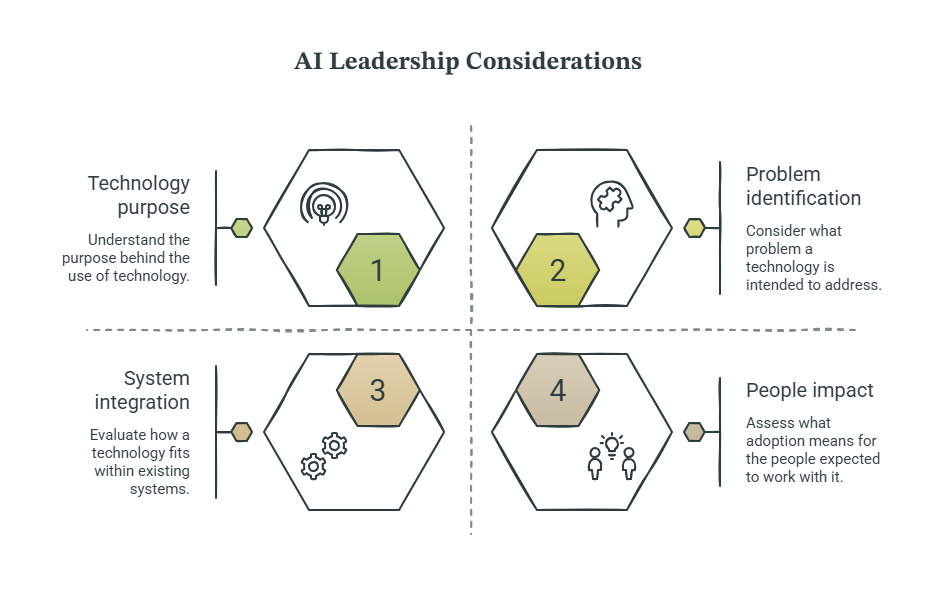
Leaders need to understand the purpose behind its use. They need to consider what problem a technology is intended to address, how it fits within existing systems, and what its adoption could mean for the people expected to work with it.
This makes technology a leadership consideration rather than simply a technical one.
At LoopLynks Events, our Technology & Innovation Awards reflect this broader relationship between technology and professional contribution. Innovation is not only about introducing something new. It is also about understanding how new ideas and technologies can be applied.
Human Expertise Still Matters
AI can process information and support certain tasks, but professional expertise develops through experience, knowledge, observation, and judgment.
A leader often has to make decisions in situations where there is no simple answer.
They may need to understand organisational priorities, professional expectations, individual circumstances, and the different perspectives of people affected by a decision.
That requires context.
Human expertise provides that context.
This is particularly relevant across sectors such as education and healthcare, where professional decisions can involve complex systems and people with different needs.
Our Education & Development and Healthcare & Wellness categories recognise the importance of professional contribution across these fields. The people working within them bring knowledge that develops through education, experience, practice, and continued learning.
AI can become part of that environment, but it does not remove the value of the expertise surrounding it.
The Opportunity Is Collaboration
The most useful conversation around AI and leadership may be about collaboration rather than replacement.
AI can support professionals with certain information-heavy or repetitive tasks. Human professionals can then apply their knowledge, judgment, creativity, and understanding of context.
For a leader, this creates an opportunity to think differently about how work is organised.
AI might help identify patterns or organise information. A professional can evaluate whether those insights are relevant to the situation. A leader can then consider the broader implications before making a decision.
Technology contributes capability.
People contribute interpretation and responsibility.
This relationship is important when considering the future of professional leadership.
Better Questions Lead to Better Technology Decisions
Technology does not automatically solve a problem simply because it is advanced.
Leaders need to ask practical questions before deciding how a technology should be used.
What is the organisation trying to achieve?
What challenge needs to be addressed?
Where can technology provide meaningful support?
What role will professionals continue to play?
What changes will teams need to make?
How does the technology connect with existing organisational priorities?
These questions help move the discussion away from technology for technology's sake.
At LoopLynks Events, this practical approach aligns with our wider recognition philosophy. Across our categories, we focus on professional work, contribution, leadership, innovation, and achievement rather than treating novelty as the only measure of progress.
AI and Continuous Learning
The development of AI also reinforces the importance of continuous learning.
Professionals do not need to know every emerging technology. But leaders increasingly need to understand enough about technological developments to have informed conversations about their potential use.
This creates a connection between AI and professional development.
Education provides one important example.
Learning environments are changing alongside technology, and education professionals need opportunities to understand new developments while considering how they relate to learning, development, leadership, and organisational needs.
This is part of the broader context behind education leadership awards. Recognition in education is not limited to academic expertise. It can also acknowledge leadership, innovation, development, communication, and contributions that influence the wider educational environment.
For us, education leadership is connected to the ability to keep learning while helping others move forward.
Healthcare Requires Both Technology and Judgment
Healthcare provides another important example of the relationship between technology and human expertise.
Healthcare professionals work in environments where knowledge, professional practice, innovation, and technology intersect.
Technology can support healthcare in different ways, but professional expertise remains central to understanding how developments fit within real-world healthcare environments.
This is why knowledge exchange and professional learning remain important.
Our Healthcare & Wellness Awards recognise contributions across healthcare professionals, researchers, healthcare organisations, startups, and public health professionals.
Healthcare also provides a natural setting for professional conversations and knowledge sharing through healthcare conferences. Such environments bring professionals together around developments, expertise, and industry conversations.
For leaders, the value of these interactions extends beyond individual learning. They can contribute to a broader understanding of how different professionals approach common challenges.
Cross-Industry Perspectives Matter
AI is not limited to one industry.
Technology leaders, healthcare professionals, educators, marketers, business executives, sustainability professionals, and other specialists are all considering how emerging technologies may influence their fields.
Their questions may be different, but the underlying leadership challenge can be similar: how should new technology be understood, evaluated, and applied?
This makes cross-industry dialogue valuable.
At LoopLynks Events, our platform brings together professionals across multiple industries and recognition categories. Our focus on leadership and professional recognition allows different areas of expertise to exist within a broader conversation.
A healthcare leader may approach technology differently from a marketing professional. An educator may raise different questions from a technology executive.
These differences can create useful perspectives.
Human Skills Become More Important
As technology develops, human capabilities remain important.
Communication is one example.
Leaders still need to explain decisions, listen to their teams, manage different perspectives, and create understanding around organisational change.
Critical thinking is another.
Professionals need to evaluate information and understand the context surrounding it rather than simply accepting an output because it was produced by technology.
Creativity also remains important.
AI can assist with generating possibilities, but leaders still need to determine which ideas are relevant and how they fit within a specific organisational or professional environment.
Empathy, collaboration, judgment, and responsibility similarly remain part of effective leadership.
Technology may change the tools available to leaders, but it does not eliminate the human responsibilities associated with leadership.
Recognition in an Evolving Professional Landscape
As industries change, professional recognition can provide a way to highlight contributions across different fields.
At LoopLynks Events, our categories cover Technology & Innovation, Education & Development, Healthcare & Wellness, Marketing & Creative Strategy, Sustainability & Environment, Media & Communications, Social Impact & Justice, Future-Forward Enterprises, and other areas of professional achievement.
This reflects the fact that leadership can take many forms.
Our education leadership awards recognise contributions within the education and development space, while our broader categories provide opportunities to recognise expertise and achievement across different industries.
The same principle applies to healthcare. Healthcare conferences and professional gatherings contribute to knowledge exchange, while recognition can highlight the professionals and organisations making contributions within the field.
For us, recognition is part of a wider conversation about expertise, leadership, innovation, and meaningful professional contribution.
Preparing Leaders for What Comes Next
AI will continue to evolve, and organisations will continue to consider how it can fit within their work.
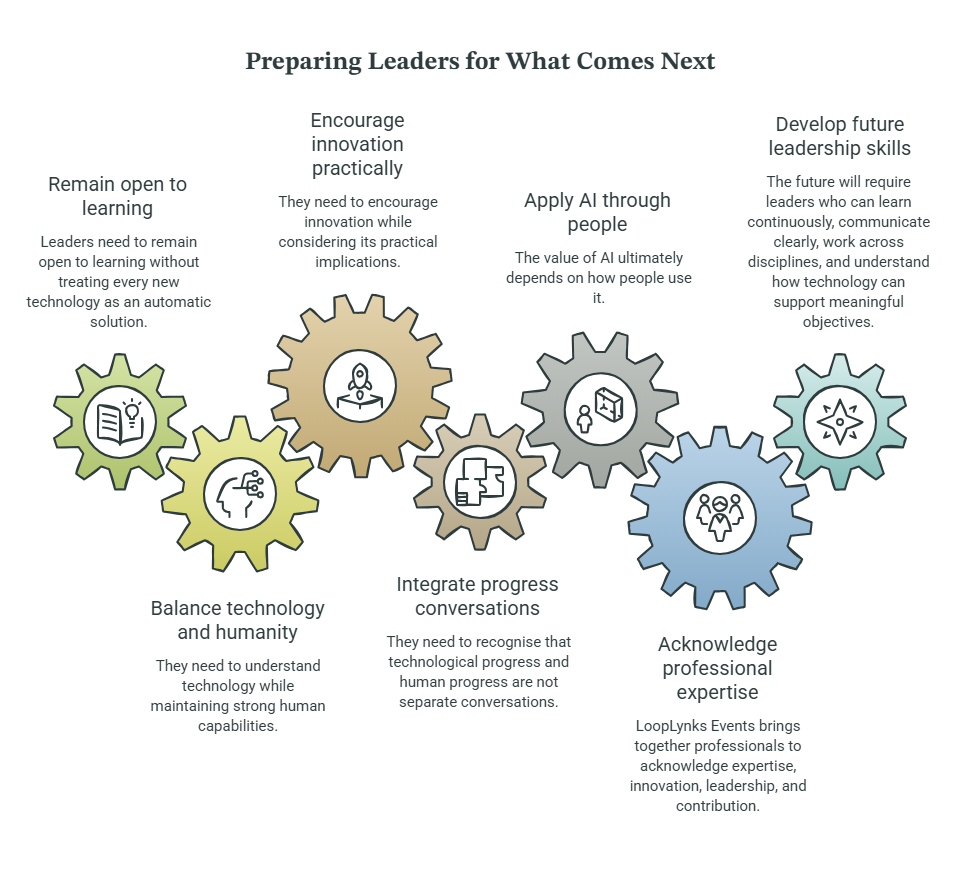
Leaders therefore need to remain open to learning without treating every new technology as an automatic solution.
They need to understand technology while maintaining strong human capabilities.
They need to encourage innovation while considering its practical implications.
They also need to recognise that technological progress and human progress are not separate conversations.
The value of AI ultimately depends on how people use it.
At LoopLynks Events, we see leadership as a continuous journey. Our recognition platform brings together professionals across industries and creates opportunities to acknowledge expertise, innovation, leadership, and contribution.
The future will require leaders who can learn continuously, communicate clearly, work across disciplines, and understand how technology can support meaningful objectives.
Conclusion: Leadership Beyond Technology
The future of leadership will not be defined by AI alone.
It will depend on how effectively leaders combine technological capabilities with human expertise.
AI can support analysis, information processing, automation, and new ways of approaching work. Human expertise provides context, judgment, creativity, communication, responsibility, and an understanding of the people and environments affected by decisions.
At LoopLynks Events, this relationship is central to how we view the evolving leadership landscape. Our education leadership awards recognise contributions within education and development, while our wider recognition categories highlight achievements across technology, healthcare, business, marketing, sustainability, media, and social impact.
The same principle applies to professional healthcare conversations. Healthcare conferences provide opportunities for knowledge exchange and professional discussion, while recognition can bring attention to meaningful contributions within the sector.
Ultimately, effective leadership in an AI-driven environment is not about choosing between technology and human expertise. It is about understanding where each can contribute and bringing them together with purpose. That balance will remain important as organisations, industries, and professionals continue to navigate what comes next.