

Innovation drives business growth by connecting technology, leadership, sustainability, and collaboration to turn ideas into practical solutions and meaningful long-term progress.
Innovation has moved beyond being a function associated only with technology teams or research departments. It increasingly influences how organisations think about growth, leadership, customer needs, operational improvement, and long-term direction. At LoopLynks Events, we recognise this broader role through our focus on leadership, technology, business, sustainability, and professional achievement. Our business tech awards reflect an environment where technology and innovation are closely connected with the work of professionals and organisations shaping their respective fields.
For modern organisations, innovation is not simply about creating something new. It is about identifying opportunities, addressing challenges, improving existing approaches, and connecting new ideas with meaningful objectives.
Innovation Is Becoming a Business Priority
Businesses operate in environments where expectations, technologies, markets, and professional practices continue to change.
In such an environment, maintaining existing processes may not always be enough. Organisations need to examine how they work, understand emerging developments, and consider where new approaches could create value.
This is where innovation becomes part of business strategy.
When innovation is treated as a strategic consideration, it becomes connected to broader organisational priorities. Leaders can consider not only what can be created, but why it should be created, who it serves, and how it fits within the organisation's direction.
At LoopLynks Events, our Technology & Innovation category reflects this broader understanding. Technology can support innovation, but innovation itself extends beyond technology. It can involve new approaches to business, leadership, communication, operations, sustainability, and professional practice.
Technology Is Expanding the Possibilities
Technology continues to influence how organisations operate and how professionals approach their work.
Digital transformation, artificial intelligence, data, automation, and other technological developments can create new possibilities for organisations.
However, technology itself does not constitute strategy.
The strategic question is how an organisation chooses to use it.
Leaders need to understand the purpose behind technology adoption and consider whether a particular solution addresses an actual organisational need.
This distinction matters because innovation should remain connected to outcomes.
Our business tech awards sit within this wider landscape of professional recognition, where technology and business innovation can be considered alongside leadership, expertise, and contribution.
For LoopLynks, the conversation is not simply about adopting the newest technology. It is about recognising the people and organisations applying innovation within their professional environments.
Innovation Requires Leadership
Ideas do not become meaningful simply because they are new.
They need direction, resources, communication, and implementation.
This makes leadership an important part of innovation.
Leaders help establish priorities and create the conditions in which new ideas can be explored. They also need to understand when an idea should move forward, when it requires further development, and when an existing approach may remain more appropriate.
This requires judgment.
Innovation therefore connects naturally with leadership because both involve making decisions about the future.
At LoopLynks Events, our recognition categories span multiple areas of professional achievement, including Technology & Innovation, Education & Development, Healthcare & Wellness, Marketing & Creative Strategy, Sustainability & Environment, Media & Communications, Social Impact & Justice, and Future-Forward Enterprises.
This breadth reflects the different ways leadership and innovation can appear across professional fields.
From Ideas to Implementation
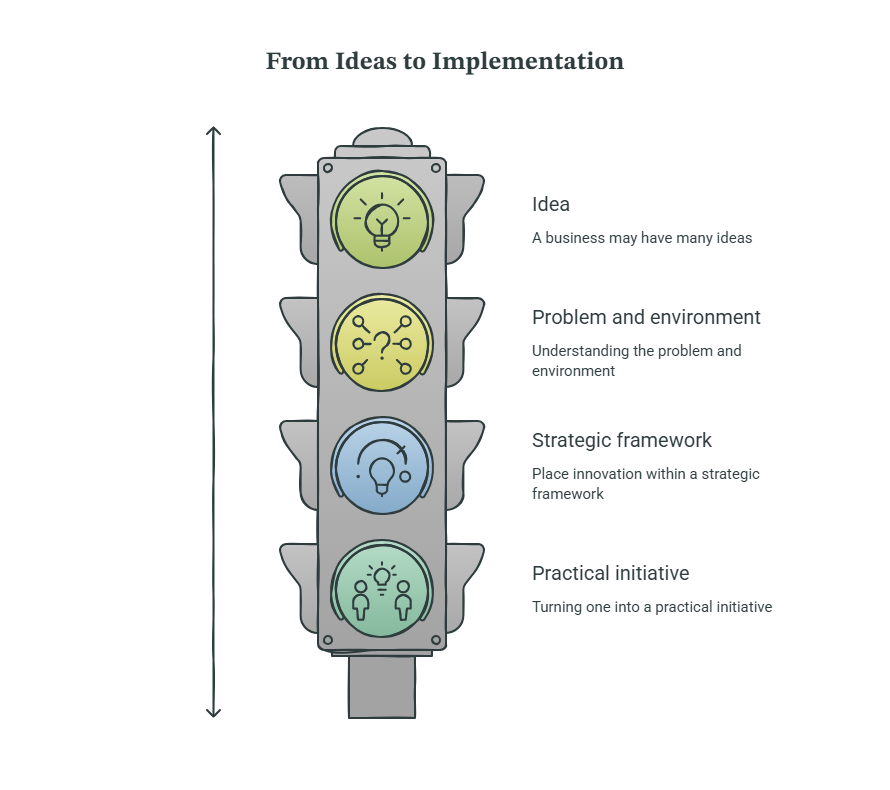
One of the most important distinctions in innovation is the difference between an idea and its application.
A business may have many ideas, but turning one into a practical initiative requires understanding the problem it addresses and the environment in which it will operate.
Leaders may need to consider:
● What challenge does the idea address?
● Who will benefit from it?
● What resources are required?
● How will people adopt the change?
● How does it fit with existing priorities?
● What needs to happen for the idea to become practical?
These questions help place innovation within a strategic framework.
For us, this is an important part of professional recognition. Our business tech awards recognise the broader relationship between business, technology, innovation, and professional contribution rather than viewing innovation as an isolated activity.
Sustainability Is Part of the Innovation Conversation
Innovation and sustainability are increasingly connected.
Organisations are considering how new approaches can support responsible resource use, operational improvements, environmental objectives, and longer-term organisational resilience.
Sustainability innovation can take different forms depending on the industry and organisation.
It may involve technology, processes, business models, operational decisions, or new approaches to existing challenges.
This is reflected in our Sustainability & Environment category, which recognises areas including sustainability innovation, environmental leadership, green business, ESG, climate leadership, and related professional contributions.
Our sustainability innovation awards therefore sit within a broader recognition landscape that connects innovation with responsibility and long-term thinking.
The underlying principle is simple: innovation can create value while also encouraging organisations to consider the wider implications of how they operate.
Cross-Industry Innovation Matters
Innovation does not happen in one industry alone.
Healthcare professionals may approach innovation differently from technology executives. Education leaders may identify different challenges from business strategists. Sustainability professionals may bring perspectives that are useful to organisations operating in completely different sectors.
These differences can create opportunities for knowledge exchange.
LoopLynks Events brings professionals from different industries into a common recognition and events environment. Its categories span multiple professional areas, creating a broader platform for recognising leadership, expertise, innovation, and contribution.
Cross-industry exposure can also encourage professionals to look at familiar challenges differently.
An approach developed in one field may raise new questions in another.
This is one reason professional conversations around innovation can extend beyond a single industry.
Innovation and Professional Learning
Innovation also changes what professionals need to learn.
As industries evolve, professionals may need to develop new skills, understand emerging technologies, and become familiar with changing approaches within their fields.
Continuous learning therefore becomes closely connected to innovation.
For leaders, this can mean creating environments where people have opportunities to develop knowledge and understand new developments.
For professionals, it can mean remaining open to learning beyond their existing responsibilities.
LoopLynks' Education & Development category reflects the importance of this relationship between learning, leadership, development, and professional contribution.
Innovation may create new tools, but people still need the knowledge and skills to understand how those tools can be used.
Recognition Can Highlight Meaningful Innovation
Recognition can play an important role in bringing attention to professional work.
At LoopLynks Events, our recognition categories provide space for contributions across industries and areas of expertise.
Technology and innovation can be recognised alongside business leadership, education, healthcare, marketing, sustainability, media, social impact, and future-focused enterprises.
Our business tech awards reflect the intersection of technology, business, and professional achievement.
Similarly, our sustainability innovation awards connect innovation with environmental responsibility and long-term organisational thinking.
Together, these areas demonstrate that innovation is not limited to one professional identity.
It can emerge through different industries, roles, organisations, and forms of expertise.
The Role of Responsible Leadership
Innovation requires ambition, but it also requires responsibility.
Leaders need to consider not only what an organisation can do, but also why it should do it and how the resulting change fits within broader organisational priorities.
This is particularly relevant when innovation involves technology or sustainability.
Technology can create opportunities, but leaders need to understand how it fits within their organisations.
Sustainability initiatives can create long-term objectives, but they also require practical thinking about implementation.
Responsible leadership connects these considerations.
It creates a space where innovation can be explored without losing sight of purpose, people, and organisational direction.
Building a Culture That Supports Innovation
Innovation is difficult to sustain if it remains the responsibility of a single department.
A stronger innovation culture can involve different areas of an organisation contributing ideas and perspectives.
Leadership can encourage people to identify challenges, question existing processes, share knowledge, and consider alternative approaches.
Communication also matters.
People need to understand why a particular change is being considered and how it relates to the organisation's broader objectives.
Collaboration can further strengthen this process by bringing different forms of expertise together.
For LoopLynks Events, this cross-disciplinary perspective is central to our broader focus on professional recognition and leadership.
Conclusion
Innovation is becoming a core business strategy because organisations increasingly need to think beyond maintaining existing approaches. Technology, sustainability, leadership, professional learning, and cross-industry collaboration are all becoming part of the broader conversation around how organisations create meaningful value.
At LoopLynks Events, we recognise this changing landscape through categories that span Technology & Innovation, Business, Sustainability & Environment, Education & Development, Healthcare & Wellness, Marketing & Creative Strategy, Media & Communications, Social Impact & Justice, and Future-Forward Enterprises.
Our business tech awards highlight the intersection of technology, business, innovation, and professional achievement. At the same time, our sustainability innovation awards recognise the growing relationship between innovation, responsibility, environmental thinking, and long-term organisational progress.
For us, innovation is ultimately about more than new ideas. It is about how leaders, professionals, and organisations turn ideas into meaningful contributions. When innovation is connected with strategy, expertise, collaboration, and responsibility, it becomes a continuing part of how organisations prepare for what comes next.