

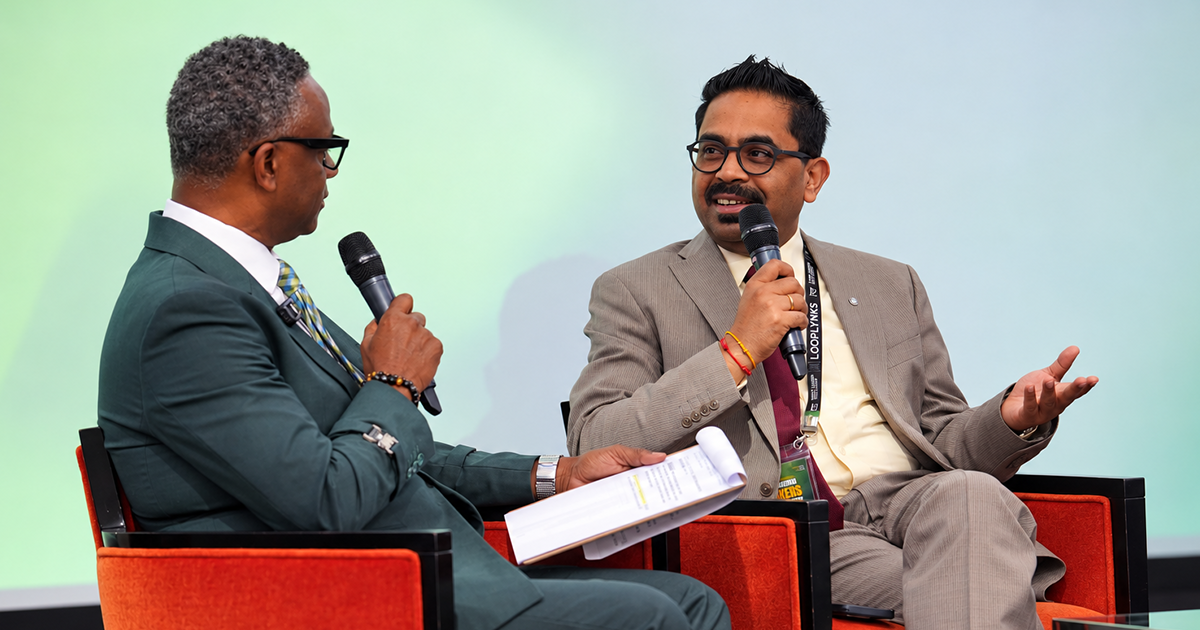
Effective leadership balances immediate performance with long-term vision through strategic decisions, adaptability, collaboration, innovation.
Leadership often requires two kinds of thinking at once. Organisations need people who can deliver results today while keeping sight of what those decisions create for tomorrow. Whether the focus is business performance, communication, healthcare, technology, education, or innovation, effective leadership involves more than meeting immediate objectives. It requires direction, judgment, adaptability, and an understanding of the wider impact of decisions.
At LoopLynks Events, we recognise that leadership can take many forms. Our recognition categories, including media leadership awards, reflect our broader focus on acknowledging professional contribution, responsibility, innovation, and meaningful achievement across industries.
Short-Term Performance Still Matters
Long-term vision cannot exist without attention to the present.
Organisations have immediate responsibilities that cannot simply be postponed for the sake of future plans. Teams need direction, projects need to progress, resources need to be managed, and existing commitments need to be addressed.
For leaders, this means understanding what requires action now.
A short-term decision may involve resolving an operational challenge, supporting a team, managing resources, or responding to changing circumstances. These decisions can have an immediate effect on an organisation's performance.
The challenge is to make those decisions without losing sight of the larger direction.
Strong leadership therefore involves more than choosing between the present and the future. It involves understanding how today's actions contribute to longer-term objectives.
Long-Term Vision Creates Direction
A long-term vision gives current decisions context.
Without a broader sense of direction, organisations can become focused on individual targets without understanding how those targets connect to wider priorities. A leader's responsibility is not necessarily to predict everything that will happen, but to establish a direction that can guide decision-making as circumstances change.
Vision also helps people understand why particular priorities matter.
When employees can see how their responsibilities contribute to a larger objective, strategy becomes easier to connect with execution. This does not mean a long-term plan should remain unchanged. Markets, technologies, professional expectations, and organisational circumstances can evolve.
Good leadership leaves room for adjustment.
The objective is not to follow a plan regardless of changing conditions. It is to maintain direction while remaining willing to reconsider the route.
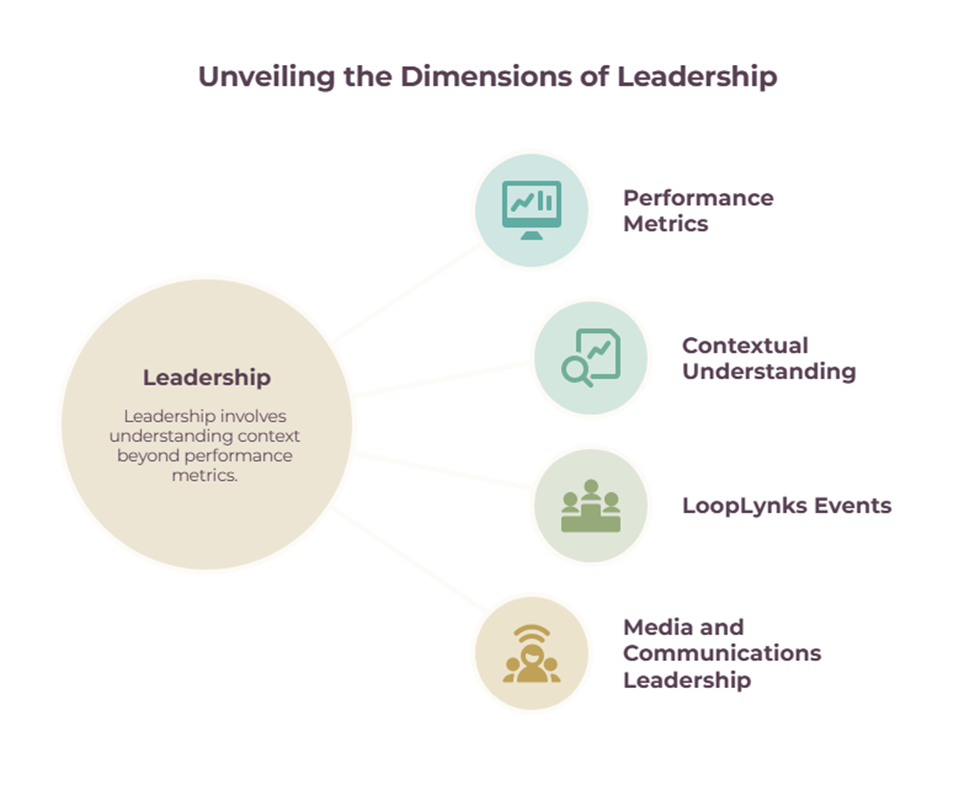
Leadership Goes Beyond Performance Metrics
Performance indicators provide valuable information, but they rarely tell the complete story.
Revenue, growth, productivity, engagement, efficiency, and other measures can show what is happening within an organisation. They do not always explain why something happened or what it means for the future.
Leadership requires looking at the context behind the numbers.
A result may reflect the work of several teams, a series of decisions, an investment in people, a change in strategy, or a long period of development. Understanding those factors helps leaders make better-informed decisions about what should happen next.
This broader understanding is reflected across LoopLynks Events.
Our recognition platform covers areas including business, finance, technology, marketing, education, healthcare, sustainability, media and communications, and social impact. Each field has different responsibilities and measures of achievement, but our approach remains focused on the contribution behind the result.
In media and communications, for example, our media leadership awards recognise the importance of clarity, integrity, responsibility, and meaningful communication. Leadership in this field is not simply about visibility. It is also about the thinking and responsibility behind how information is communicated.
Innovation Needs Both Patience and Discipline
Innovation is another area where short-term and long-term thinking need to work together.
New ideas often require time to develop. An organisation may need to test an approach, learn from the results, make adjustments, and determine whether the idea can work in practice.
At the same time, innovation requires discipline.
Not every idea can receive unlimited resources, and not every experiment will produce the intended result. Leaders need to understand where experimentation can contribute to wider objectives and where existing priorities need to remain protected.
This balance is particularly relevant as technology continues to influence organisations and professional environments.
At LoopLynks Events, our Technology & Innovation Awards focus on work that moves beyond ideas and demonstrates practical development, implementation, and contribution. Our approach reflects the importance of understanding not only what has been created, but also how it is being applied.
People Connect Strategy With Execution
A long-term strategy becomes meaningful only when people can understand and contribute to it.
Leaders therefore need to communicate direction clearly. They need to explain priorities, listen to different perspectives, and help teams understand how their work connects with broader objectives.
Communication is not simply a leadership skill. It is part of leadership itself.
A leader can have a strong strategy, but if people do not understand it, the strategy may remain disconnected from execution. Similarly, when people are given space to contribute, leaders can gain perspectives that may not be visible from the top of an organisation.
This is one reason leadership cannot be separated from collaboration.
Our work at LoopLynks Events reflects this through events and recognition initiatives that bring professionals from different fields into broader conversations. The opportunity to hear different perspectives can encourage people to reconsider familiar approaches and understand challenges from another point of view.
Healthcare Demonstrates the Importance of Long-Term Thinking
Healthcare provides an important example of the relationship between immediate responsibilities and long-term impact.
Healthcare professionals work in environments where knowledge, professional practice, technology, research, and organisational needs continue to develop. Immediate responsibilities remain essential, but decisions can also have implications for future care, systems, teams, and professional development.
At LoopLynks Events, our Healthcare Awards recognise contributions across areas including healthcare leadership, innovation, care, research, and public health. The category reflects our wider recognition approach, which considers professional contribution and impact rather than focusing only on visibility.
The same principle applies to professional learning.
Healthcare professionals need opportunities to exchange knowledge, discuss developments, and understand different perspectives. Conferences and professional gatherings can contribute to these conversations by bringing people together around areas of shared interest and responsibility.
Recognition Can Make Leadership More Visible
Some leadership contributions are immediately visible.
Others happen quietly through years of decision-making, team development, problem-solving, innovation, and consistent responsibility.
Recognition can help bring greater attention to those contributions.
At LoopLynks Events, our recognition platform is designed to acknowledge professionals and organisations across different industries and areas of expertise. Our awards provide a space for achievements and professional journeys to be recognised while contributing to a broader conversation about what meaningful leadership looks like.
Our media leadership awards, for instance, create a category through which contributions within media and communications can be recognised. Similar recognition opportunities exist across our other professional categories.
The purpose is not to suggest that an award defines someone's entire contribution. Rather, recognition can provide visibility to work that may otherwise remain outside the spotlight.
Balancing Today With Tomorrow
The relationship between short-term performance and long-term vision is not a choice between two opposing priorities.
Organisations need both.
Short-term performance provides the discipline required to keep work moving. Long-term vision provides the direction needed to determine where that work should lead.
Leaders sit between these two responsibilities.
They need to understand what requires attention today while asking whether today's decisions support tomorrow's objectives. They need to remain accountable for current outcomes without becoming so focused on immediate results that longer-term opportunities are overlooked.
This requires judgment.
It also requires the willingness to reconsider established approaches when circumstances change.
Building Leadership for What Comes Next
The future of leadership will continue to be shaped by changing industries, new technologies, evolving professional expectations, and the growing need for collaboration.
At LoopLynks Events, we see leadership as an ongoing journey. Our global recognition platform brings together different professional fields because meaningful leadership does not belong to one industry or one type of organisation.
Across our categories, we recognise different forms of contribution while maintaining a common focus on achievement, responsibility, innovation, and impact.
The leaders who balance short-term performance with long-term vision understand that progress is rarely created by one decision. It develops through consistent choices, learning, communication, and the ability to connect immediate responsibilities with a broader purpose.
In healthcare, this continuing conversation can be seen through professional gatherings and medical conferences 2026, where knowledge exchange and discussion can support the wider professional environment. In media and communications, our media leadership awards reflect another dimension of leadership: the responsibility to communicate with clarity and purpose.
Ultimately, leadership is not simply about delivering today's results or imagining tomorrow's possibilities. It is about connecting the two, making responsible decisions now while keeping sight of the impact those decisions can create over time.