

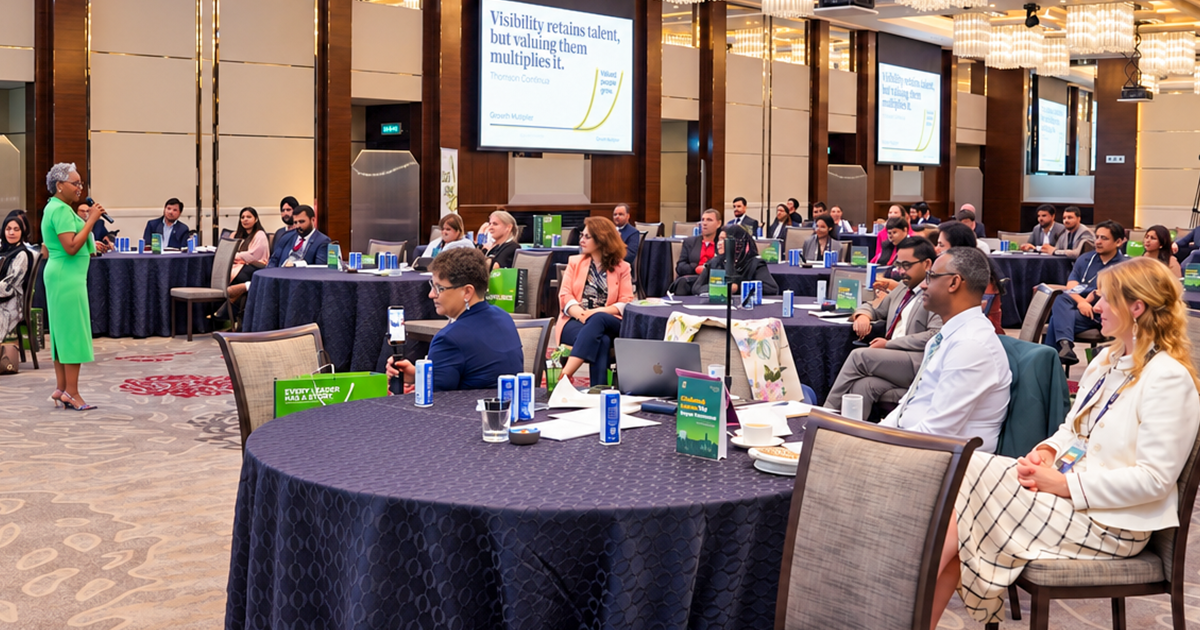
Leadership is evolving through technology, continuous learning, collaboration, human judgment, and purpose, with future leaders focused on adaptability, influence and meaningful impact.
Leadership is changing because the environment in which leaders operate is changing. Organisations are navigating technological development, evolving professional expectations, cross-industry collaboration, and the need to make decisions with both immediate responsibilities and longer-term consequences in mind. Leadership, therefore, is no longer defined only by position, authority, or the ability to deliver established objectives.
At LoopLynks Events, leadership is viewed as a continuous journey rather than a final destination. Its recognition platform brings attention to professionals and organisations whose work reflects achievement, contribution, innovation, and leadership across different fields. This broader perspective is particularly relevant as leaders are increasingly expected to guide organisations through change while keeping people, purpose, and performance connected.
Leadership Is Becoming More Human
Technology has changed the speed at which organisations operate, but it has not removed the importance of human judgment.
Leaders still need to communicate clearly, listen to different perspectives, build trust, and help people understand why a particular direction matters. As technology becomes more closely connected with professional environments, leadership also involves helping teams understand how change affects their responsibilities and opportunities.
The same principle can be seen across different professional fields. Marketing leaders, for example, must balance creativity with strategy and execution. The work recognised through global marketing excellence awards can demonstrate how leadership extends beyond campaigns to the thinking, decision-making, and organisational contribution behind them.
For LoopLynks Events, this connects directly with the belief that leadership should be understood through the decisions and contributions behind achievement, rather than simply through a person's title.
From Managing Performance to Creating Direction
Management and leadership remain closely connected, but they are not identical.
Management helps organisations execute. Leadership also asks whether the organisation is moving in the right direction.
That distinction becomes particularly important when circumstances change. Leaders may need to reconsider established processes, respond to new information, or make decisions without having complete visibility of what lies ahead.
This requires curiosity.
The ability to ask better questions can become just as important as having immediate answers. A leader who remains open to new information can recognise when an existing approach needs to change without abandoning the principles that continue to matter.
This broader understanding of leadership also appears across the LoopLynks Events recognition platform. Different categories bring attention to contributions across business, technology, finance, education, healthcare, sustainability, marketing, media, social impact, and other professional areas.
The Future Will Require Continuous Learning
The idea that leaders should already have all the answers is becoming increasingly difficult to sustain.
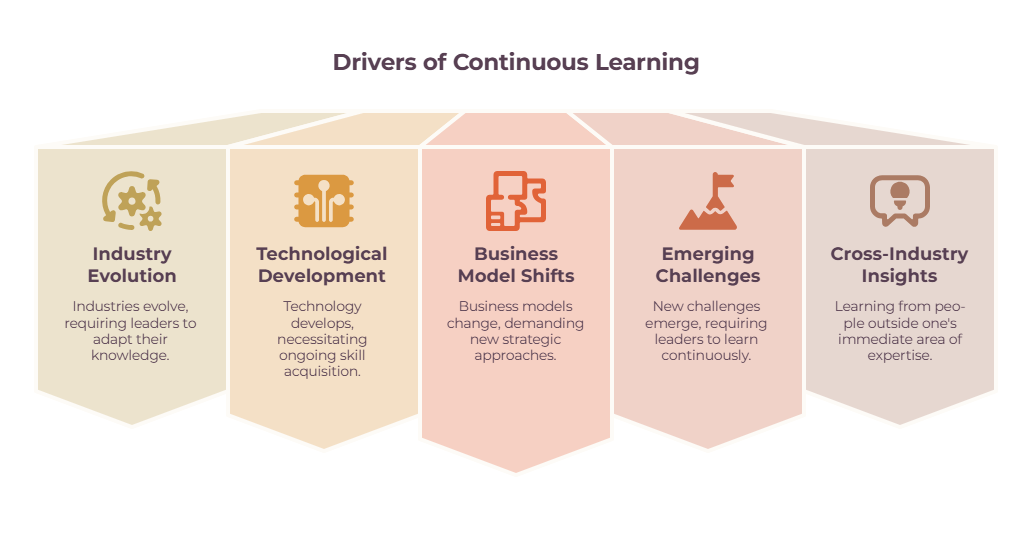
Industries evolve. Technology develops. Business models change. New challenges emerge. A leader's existing experience remains valuable, but it needs to be combined with the willingness to keep learning.
Continuous learning also means being prepared to learn from people outside one's immediate area of expertise.
A healthcare leader can encounter useful ideas from technology. A business executive can learn from education. A sustainability professional can gain a different perspective from manufacturing or finance. Cross-industry conversations can create opportunities to see familiar challenges differently.
This is particularly relevant to professionals working in areas where responsibility and innovation intersect. A leader contributing to sustainable business practices, for example, may need to consider environmental priorities alongside operational realities. Recognition such as a sustainable entrepreneurship award can bring visibility to entrepreneurial work connected with sustainability and responsible business development.
Technology Will Change Leadership, Not Eliminate It
Technology is one of the clearest reasons leadership expectations are evolving.
Artificial intelligence, digital systems, automation, and other technologies can process information, support tasks, and influence how organisations operate. But leaders still need to determine how these capabilities should be used within their organisations.
That creates a different leadership responsibility.
Leaders need to understand enough about emerging technologies to ask meaningful questions while also considering people, operational realities, and organisational objectives. The challenge is not simply adopting technology. It is understanding where technology creates value and where human judgment remains essential.
LoopLynks Events reflects this relationship between technology and leadership through its Technology & Innovation focus and discussions around digital transformation and technology's human side.
Leadership Is Increasingly About Influence
Authority can give someone the ability to make a decision. Influence determines how that decision travels through an organisation.
A leader may have formal responsibility, but meaningful influence can also come from credibility, consistency, communication, and the ability to bring people together around a shared objective.
This is particularly important in organisations where teams work across functions and disciplines. The ability to collaborate becomes part of leadership itself.
The same principle applies to professional recognition. Global marketing excellence awards, for instance, can recognise work where strategic thinking, creativity, execution, and measurable contribution come together. Similarly, recognition such as a sustainable entrepreneurship award can highlight entrepreneurial contributions connected with sustainability and responsible approaches to business.
Recognition does not replace the work. Its value lies in bringing attention to the contribution behind it.
What the Future of Leadership May Demand
The future of leadership is unlikely to be defined by one fixed set of characteristics.
Instead, leaders will need to combine several capabilities: strategic thinking with execution, technological awareness with human judgment, confidence with curiosity, and ambition with responsibility.
Adaptability will matter because circumstances will continue to change. Communication will matter because people need clarity during periods of uncertainty. Learning will matter because existing knowledge cannot always answer emerging questions.
Most importantly, leadership will continue to be measured through what happens beyond the individual.
How do teams develop? How does an organisation respond to change? What ideas move forward? What relationships are strengthened? What kind of contribution remains after a particular decision or initiative is complete?
These questions move leadership away from a narrow definition based on position and toward a broader understanding based on influence and impact.
Looking Ahead
The leadership landscape continues to evolve. Technology is influencing professional environments, industries are becoming more connected, and leaders are being asked to think beyond traditional functional boundaries.
At LoopLynks Events, this evolving definition sits at the centre of its recognition philosophy. The platform recognises leadership and professional contribution across industries, creating space for different forms of achievement to be acknowledged and shared.
The leaders of the future will not simply be those who know the most or hold the most senior titles. They will need to keep learning, make thoughtful decisions, bring people together, and respond responsibly to changing circumstances.
From marketing and technology to sustainability and business development, leadership can take different forms. Global marketing excellence awards can bring visibility to strategic and creative marketing leadership, while a sustainable entrepreneurship award can recognise entrepreneurial work connected with sustainability and responsible development.
Ultimately, what leadership looks like now and in the future is less about a fixed title and more about the ability to turn expertise, responsibility, learning, and purpose into meaningful impact.